
Why Literacy
Every Child Deserves the Power to Read
Why Literacy?
Far too many children are growing up without the gift of reading, leaving them struggling to find their voice and their place in the world. This crisis isn’t just about test scores, it’s about futures cut short and dreams left behind.
At the heart of transformative education lies a curriculum that doesn’t just teach—it inspires. We believe early childhood literacy is about unlocking voices, stories, and self-expression. Our unique literacy curriculum blends the evidence-based practices of the science of reading with the creative power of art, music, and drama to engage the whole child.
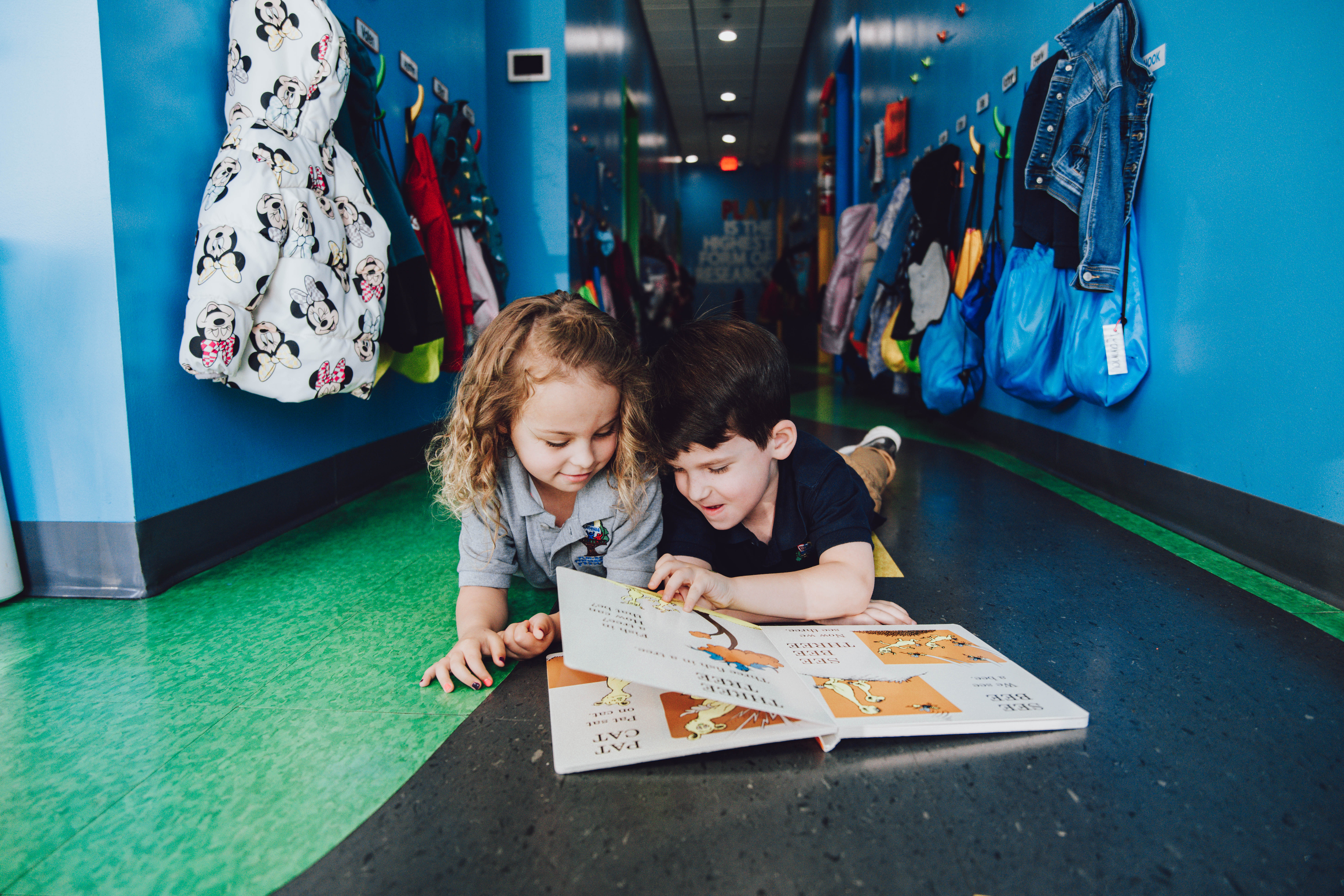
When children are given the chance to read with confidence, they discover not only the words on a page but also the power within themselves. Every book becomes a doorway, every lesson a building block toward independence, resilience, and hope for a brighter future.
Percent of students not reading at grade level by 4th grade.
American adults who are functionally illiterate.
Students who will end up on welfare or in jail due to illiteracy.
Government funding withheld from school districts in 2025.
2003–2019: Shifting Our Focus to Literacy First
After much research, experimentation, and expert consultation, in 2003 we turned our focus toward improving the literacy rates of elementary learners in CPS by offering a core-wraparound curriculum and instructional coaching for their teaching faculties. Soon after, we further concentrated our efforts on classroom literacy programming exclusively for students in PreK–1st grade. We made this move in response to our own experience in schools, bolstered by research indicating that a student’s reading skills at the beginning of their academic years are highly predictive of a learner’s future literacy capability.
Since 2003, we have partnered with hundreds of schools in Chicago’s under-resourced neighborhoods on the south and west sides, training their teachers to deliver our engaging reading improvement curriculum in their classrooms. The results have been outstanding, with consistently more students mastering early literacy skills year after year at a rate higher than their peers without our services.
After observing comparatively similar societal circumstances and literacy rates among underserved students in Nevada’s Clark County, we piloted our curriculum in Las Vegas during the 2017–2018 school year and provided our unique instructional support to 18 teachers and 450 learners. We continue to serve in Clark County today.
2020–Present: Expanding Access and Adapting to Change
In 2020, we began a partnership with the Steans Family Foundation to implement our pre-kindergarten reading program in their early childhood centers. This year, we are delivering the program in five of their centers as well as three CPS schools and this partnership continues to explore new ways to expand our reach.
Reading In Motion’s services have broadened substantially since its founding. In 2020, we pivoted to meet the changing needs of educators and students during the pandemic. We began implementing new models and program components to provide more resources for today’s educators and students, including a virtual learning option that keeps students engaged regardless of environment.
Since then, we have continued to refine and strengthen our approach. Our curriculum has been updated to align even more closely with the science of reading, and our learning management system has been enhanced to integrate these best practices seamlessly. We have also invested in training our coaches and program staff through CORE Science of Reading professional development, ensuring that they are equipped with the latest knowledge and tools to support educators. Importantly, all of these services are now delivered completely free of charge, removing barriers for schools and communities to access high-quality literacy instruction
Scaling Literacy Impact for More Students
The Literacy Divide: How Race and Income
Shape a Child’s Future
“Once you learn to read, you will be forever free. ” – Frederick Douglass
Right now, only about 1 in 3 fourth graders in the U.S. can read at a proficient level. The gap is even wider for children of color and those from low-income families, where fewer than 2 in 10 students are reading on grade level.
These numbers aren’t just statistics—they represent lost opportunities. A child who struggles to read is more likely to face poverty, unemployment, or dropping out of school. But when a child becomes a confident reader, doors open—to knowledge, to imagination, and to a future full of possibility.
Your support can change that story. By investing in literacy, you’re giving children the tools to succeed in school, break cycles of inequality, and dream bigger than their circumstances.
Together, we can turn the page toward justice and hope.